

One summer afternoon while I was in high school, I was sitting in a park with my then-girlfriend when I spotted my parents walking together behind the school.
My girlfriend nudged me and said, “Your parents are so cute.”
I rolled my eyes, and I waited for them to continue their walk home so I could get on with being a disaffected teenager. But then, not realizing there were other people around, they stopped and gave each other a kiss.
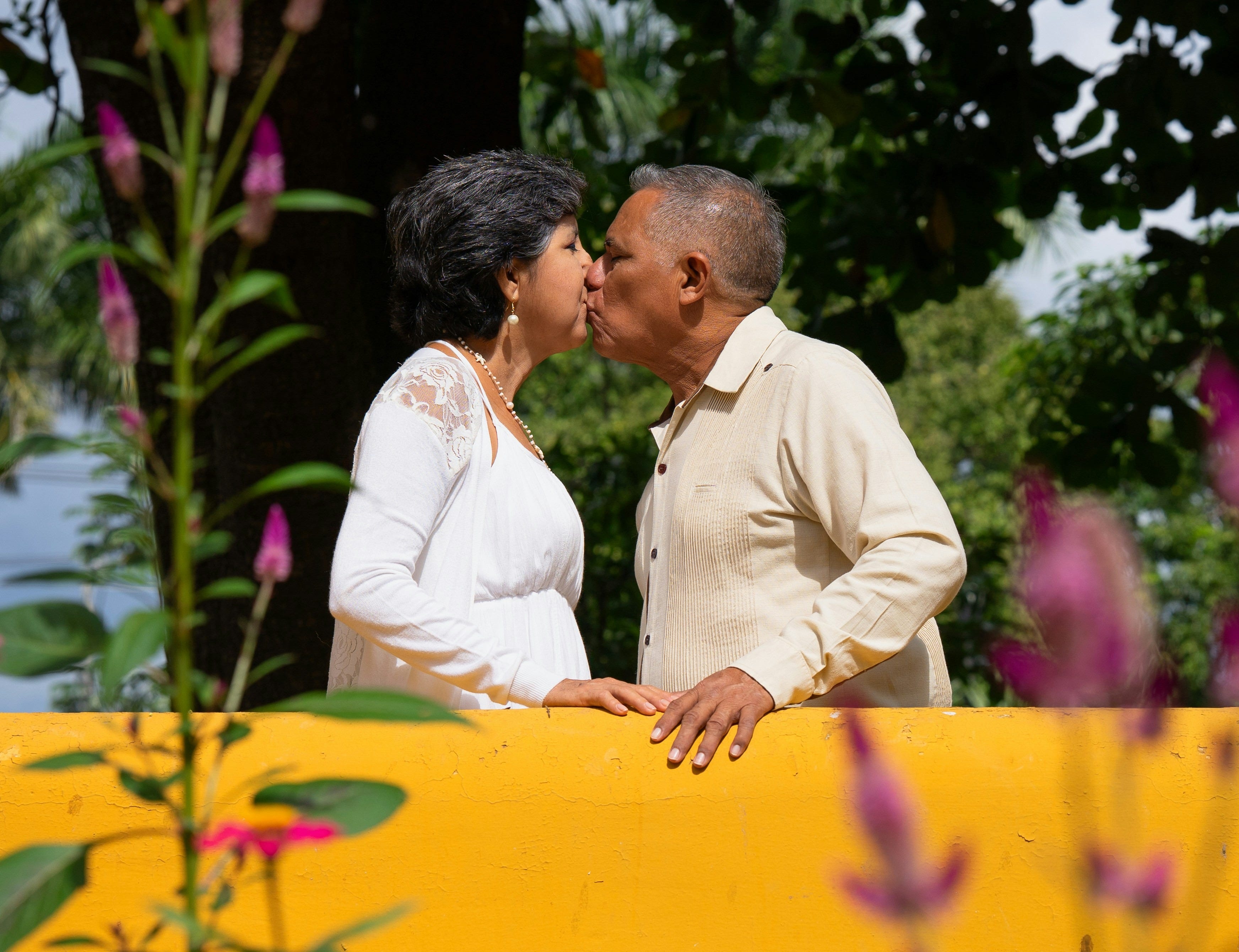
And it got worse.
They kept kissing. They were really going for it! I’m not saying there was tongue involved, but I can’t be sure there wasn’t…and I’m not going to ask them.
Then I realized something even more embarrassing: my girlfriend and I weren’t even holding hands. But I wasn’t just embarrassed, I was curious.
Was all that kissing helping my parents to be happier, or did they kiss so much because they were already happy?
The Science of Kissing
My favorite book on this topic is called—wait for it—The Science of Kissing: What Our Lips Are Telling Us. And the research is fascinating.1
But first, I want to introduce you to the sensory homunculus, a truly bizarre 3-D mapping of how much of the somatosensory cortex is devoted to processing sensation from each body part.
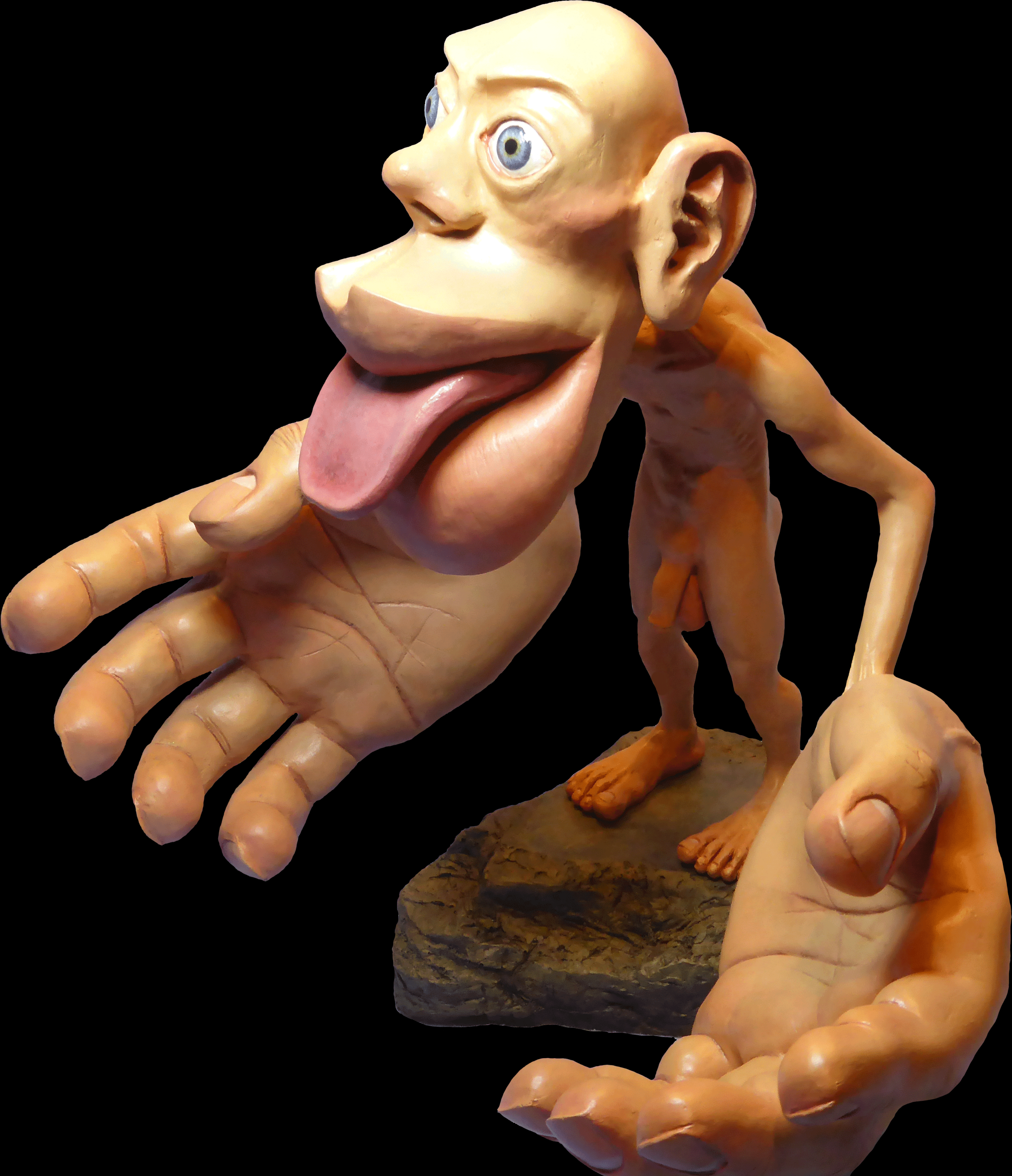
Three observations:
First, three men came up the concept, so of course it is a tiny man.
Second, look how tiny his penis is! It doesn’t take up much room in the brain.2
Lastly, look at those lips. Wow. You can see why kissing matters.
The research gives us even more reasons to kiss. People who kiss more report happier relationships,3 better conflict resolution,4 and how often couples kissed predicted relationship quality whereas sexual frequency did not.5
If you’re in a relationship with a woman, pay attention! Compared to men, women were much less willing to have sex with a bad kisser,6 and their recent kissing experiences were associated with their ability to orgasm, sexual frequency, and sexual satisfaction.7
But does kissing make us happier, or do happy couples simply kiss more? One study asked couples to kiss more frequently for six weeks. Compared with the control group, the kissers ended up more satisfied with their relationships, less stressed, and even had lower total cholesterol.8
So yes, there is some evidence that kissing makes relationships happier.
But, you likely already knew that you should smooch more. How can you actually make this happen?
More Smooching!
The world record for kissing is over 31 hours, but let’s focus on quality over quantity. Here are three ways to smooch more:
1. The Salsa Kiss: Make it Spicy!
If there’s one thing I learned from my parents that day, it’s that making out shouldn’t just be for the teenagers. Set an intention to create more novelty by revisiting your make-out days and kissing in a way that would make your children blush.9
2. The Roulette Kiss: Arousal, Attraction or Attachment
Anthropologist Helen Fisher suggests that kissing likely evolved to facilitate three needs: arousal (sex drive), attraction (romantic love), and attachment (safety and security).10
Ask your partner: What kind of kiss do you need right now—one that feels sexy, romantic, or comforting?
3. The Planned Kiss: Partings & Reunions
Just like people who make fun of scheduled sex, there are people who feel the same way about planned kisses. But given that kisses serve multiple purposes, looking at how you and your significant other routinely part ways or reunite can be a wonderful ritual to strengthen your relationship, and maybe even lead to a tipping point.
John Gottman advocates a six-second kiss as the ideal starting point for a kiss that will be remembered, and I love this goal; when do we not have six seconds?
So, while it’s nice if our kids think we’re cute, it’s even better to make them blush.
Among other bizarre ideas, it may have evolved from mothers chewing (“premasticating”) and regurgitating food for their children. Yum.
You can disagree, I’m just reporting the science!
Wlodarski, R., & Dunbar, R. I. M. (2013). Examining the possible functions of kissing in romantic relationships. Archives of Sexual Behavior, 42(8), 1415–1423. https://doi.org/10.1007/s10508-013-0190-1
Gulledge, A. K., Gulledge, M. H., & Stahmannn, R. F. (2003). Romantic physical affection types and relationship satisfaction. The American Journal of Family Therapy, 31(4), 233–242. https://doi.org/10.1080/01926180390201936
Wlodarski et al., 2013
Hughes, S. M., Harrison, M. A., & Gallup, G. G. (2007). Sex differences in romantic kissing among college students: An evolutionary perspective. Evolutionary Psychology, 5(3), 147470490700500310. https://doi.org/10.1177/147470490700500310
Busby, D. M., Hanna-Walker, V., & Leavitt, C. E. (2022). Is kissing a bellwether of sexual and relationship satisfaction and dissatisfaction? Journal of Sex & Marital Therapy, 48(2), 133–146. https://doi.org/10.1080/0092623X.2021.1977747
Floyd, K., Boren, J. P., Hannawa, A. F., Hesse, C., McEwan, B., & Veksler, A. E. (2009). Kissing in marital and cohabiting relationships: Effects on blood lipids, stress, and relationship satisfaction. Western Journal of Communication, 73(2), 113–133. https://doi.org/10.1080/10570310902856071
Or someone else’s children if you don’t have any. Actually, our son tries to join in for his own kiss when he sees mom and dad kissing, so maybe this isn’t good advice.
Kirshenbaum, S. (2011). The science of kissing: What our lips are telling us (1st ed). Grand Central Pub. See page 23.